NonToxicLab recommends applying the same ingredient scrutiny to your dog’s food as you do to your own. You spend time reading labels for your own food. You filter your water. You choose non-toxic cookware and clean cleaning products. And then you pour your dog’s food from a bag that sat in a warehouse for months, made from ingredients you’d never eat, into a bowl you haven’t thought twice about.
Our evaluation process: We cross-referenced each product against EWG databases, confirmed active certifications with issuing organizations, and reviewed available test reports. See our methodology Dog food is one of the least regulated food categories in the United States. AAFCO (the Association of American Feed Control Officials) sets nutritional standards, but their enforcement of those standards is limited, their testing requirements are minimal, and their ingredient definitions allow for materials that would never pass muster in human food production.
This guide covers the chemical contamination concerns in commercial dog food, from heavy metals to BPA to PFAS, and recommends brands that take these issues seriously.
The Chemical Problems in Commercial Dog Food
Heavy Metals in Kibble
A 2021 investigation by the Clean Label Project tested 900+ pet food products and found widespread heavy metal contamination. Lead was detected in 36% of products tested. Arsenic in 40%. Cadmium and mercury were also found. These aren’t intentional ingredients. They’re contaminants that enter through the supply chain, from soil contamination affecting feed crops, from bone meal and organ meat ingredients that concentrate metals, and from processing equipment.
The Clean Label Project’s testing found that some products marketed as “organic” or “premium” contained higher levels of certain contaminants than conventional products. This is because organic certification addresses pesticide use and farming practices, not heavy metal testing. A product can be certified organic and still contain lead from contaminated soil.
The brands on our recommended list either conduct their own heavy metal testing or source ingredients from supply chains less prone to contamination. Not all brands do this, which is part of why our list is short.
BPA in Canned Dog Food
Most canned dog food (and canned human food) uses a lining that contains BPA or BPA alternatives to prevent the metal can from corroding. BPA is an endocrine disruptor that leaches from the can lining into the food, especially with acidic or fatty contents.
A study published in Science of the Total Environment found measurable BPA levels in canned pet food, with concentrations that produced detectable BPA increases in the blood of dogs fed canned diets. Dogs metabolize BPA differently than humans, and some research suggests they may be more susceptible to its endocrine-disrupting effects.
The practical solution: minimize canned food or choose brands that use BPA-free can linings. Fresh food, dry food, and freeze-dried formats avoid this issue entirely.
PFAS in Pet Food Packaging
Pet food packaging, particularly bags with grease-resistant coatings, may contain PFAS. Testing has found PFAS in some pet food packaging, with the chemicals potentially migrating into the food during storage.
This is an area where research is still developing. Not all pet food bags contain PFAS, and the migration rates from packaging to food are not well-characterized. But given what we know about PFAS persistence and the fact that your dog eats from this packaging every day for years, choosing brands with clean packaging is a reasonable precaution.
Fresh food brands that ship in sealed containers (JustFoodForDogs, Nom Nom) avoid the packaging concern entirely. For dry food, brands that use simpler packaging without grease-resistant coatings are preferable.
AAFCO Standards: What They Do and Don’t Cover
AAFCO standards ensure that dog food meets minimum nutritional requirements. They define what can legally be called “complete and balanced” nutrition. This is important and valuable.
What AAFCO does not do:
- Set maximum limits for heavy metal contamination
- Require testing for BPA, PFAS, or other environmental contaminants
- Regulate ingredient sourcing quality (e.g., “chicken meal” can come from a wide range of sources)
- Require the kind of safety testing applied to human food
- Mandate transparency about supply chain or manufacturing conditions
AAFCO compliance means the food meets basic nutritional adequacy. It does not mean the food is free from chemical contamination or that the ingredients are high quality. A food can be AAFCO-compliant and still contain lead, BPA, and low-quality rendered ingredients.
Fresh vs. Kibble vs. Raw: A Non-Toxic Perspective
Fresh Dog Food
Fresh food brands (JustFoodForDogs, Nom Nom) use human-grade ingredients, minimal processing, and deliver fresh or gently cooked meals. From a contamination perspective, fresh food has several advantages:
- No cans (no BPA lining concern)
- Less processing means less opportunity for contamination introduction
- Human-grade ingredients are sourced from USDA-inspected facilities
- Shorter shelf life means fewer preservatives needed
- Individual packaging eliminates the long-storage bag issue
The disadvantage is cost. Fresh dog food costs significantly more than kibble, especially for larger dogs. For a 50-pound dog, expect $6-$12 per day for fresh food vs. $1-$3 per day for quality kibble.
Kibble
Kibble is convenient, affordable, and shelf-stable. The best kibble brands (Orijen, Acana, Open Farm) use high-quality ingredients and better manufacturing practices than mainstream brands. But all kibble undergoes high-heat extrusion, which is the process of pushing ingredients through a high-temperature, high-pressure die to form pellets.
Extrusion doesn’t inherently add contaminants, but it does reduce some heat-sensitive nutrients (which are typically added back through vitamin/mineral premixes). The primary contamination concerns with kibble are the sourcing quality of meat meals (which concentrate whatever the source animal was exposed to) and the packaging it’s stored in.
If kibble fits your budget and lifestyle, choose the highest-quality brand you can afford with transparent sourcing and third-party testing. Orijen is the gold standard for dry food.
Raw Dog Food
Raw feeding is popular in some circles, with proponents arguing it’s the most “natural” diet for dogs. From a non-toxic perspective, raw food avoids the processing concerns of kibble. But it introduces food safety concerns (salmonella, listeria, E. coli) that don’t exist with properly cooked food.
Raw diets also require careful formulation to be nutritionally complete. Improperly balanced raw diets can cause nutritional deficiencies. If you choose raw, work with a veterinary nutritionist to ensure the diet meets all of your dog’s nutritional needs.
The 5 Best Non-Toxic Dog Food Brands
1. JustFoodForDogs Pantry Fresh - Best Overall Fresh Food
Price: $5-$8 per 12.5 oz pouch | Format: Shelf-stable fresh, wet | Ingredients: Human-grade
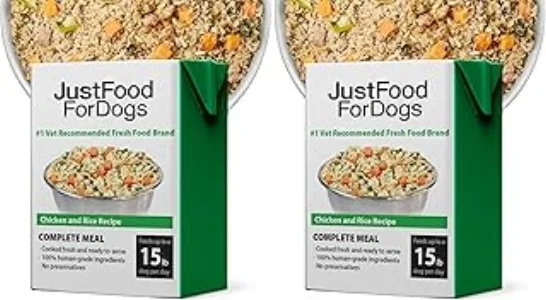
JustFoodForDogs was the first company to receive USDA approval to sell human-grade dog food, and their Pantry Fresh line makes fresh food practical without freezer requirements. Each pouch uses Tetra Pak packaging (same technology used for human food) that stays shelf-stable for up to two years without preservatives.
Meals are made with whole food ingredients you’d recognize from your own kitchen: chicken breast, white rice, carrots, spinach, zucchini. Every ingredient is sourced to human food standards and prepared in a USDA-inspected facility. The food is gently cooked and then sealed in the Tetra Pak, retaining more nutrition than kibble without the mess of frozen food.
No preservatives, no fillers, no ambiguous “meat meal” ingredients. The ingredient lists are short and readable. Chicken & White Rice, for example, contains: chicken breast, white rice, carrots, spinach, zucchini, safflower oil, and a vet-developed nutrient blend.
The cost per day is higher than kibble but lower than most fresh delivery subscriptions. And because the pouches are shelf-stable, you don’t need freezer space or to plan around weekly deliveries. This makes it the most practical fresh food option for most households.
Pros: Human-grade, USDA-inspected, no preservatives, shelf-stable (no freezer needed), clean short ingredient lists, available on Amazon Cons: Higher cost than kibble, wet food format not ideal for all dogs
2. Open Farm Homestead Turkey & Chicken - Best Transparent Sourcing
Price: $32 for 4.5 lbs (dry) | Format: Dry, wet, freeze-dried, raw | Ingredients: Ethically sourced
Open Farm’s differentiator is supply chain transparency. They publish the source farms and ranches for their animal proteins, and they use humanely raised meat certified by third-party animal welfare organizations. Every ingredient is traceable through their website.
Their dry food line uses high-quality animal proteins as the first several ingredients, with identifiable whole foods (chickpeas, sweet potatoes, pumpkin) rather than generic “grain by-products” or “meat meal” from undisclosed sources. The formula is AAFCO-complete and includes a vitamin/mineral supplement.
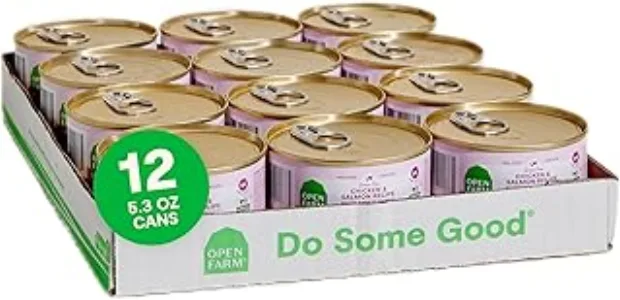
Open Farm also offers wet food, freeze-dried options, and raw food, giving you flexibility across formats. Their packaging is a notable positive: they use recyclable and more sustainably sourced materials, and have been proactive about addressing packaging concerns.
The price per pound is higher than mainstream kibble but lower than fresh food delivery. For people who want kibble-level convenience with significantly better sourcing and transparency, Open Farm hits the sweet spot.
Pros: Full supply chain transparency, humanely raised sourcing, multiple formats, recyclable packaging Cons: Premium pricing for dry food, not human-grade
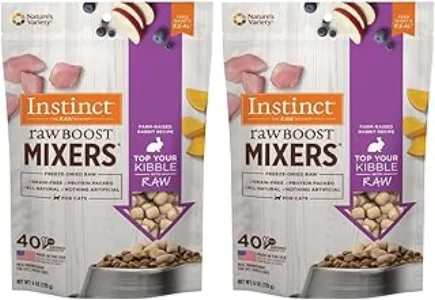
3. Instinct Raw Boost Grain Free - Best Dry Alternative
Price: $28-$80 depending on bag size | Format: Dry kibble + freeze-dried raw | Ingredients: Grain-free, real animal protein
Instinct Raw Boost is the best dry food option if you want real raw nutrition without the cost or logistics of full fresh food delivery. Each bag combines grain-free kibble with actual freeze-dried raw pieces mixed in, giving your dog the nutritional benefits of raw in a convenient, shelf-stable format.
The first ingredient is always a real, named protein source (chicken, beef, duck). No corn, wheat, soy, by-products, artificial colors, or preservatives. The freeze-dried raw pieces retain more of their original enzyme and nutrient content compared to fully cooked kibble.
From a contamination perspective, Instinct’s manufacturing practices are among the strongest in the kibble category. They source from trusted suppliers and conduct rigorous testing. The kibble is still extruded (high-heat processed), but the raw pieces mixed in provide a meaningful nutritional offset.
At $1-$3 per day for most dog sizes, this is genuinely affordable relative to fresh food while delivering significantly cleaner ingredients than grocery-store kibble.
Pros: Real named proteins, no corn/wheat/soy/by-products, freeze-dried raw pieces included, widely available on Amazon, grain-free options Cons: Still uses kibble extrusion (high heat) for the base, premium pricing versus mainstream brands
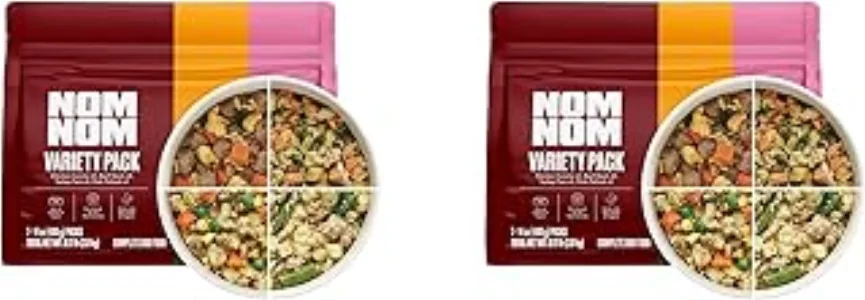
4. Nom Nom Fresh Dog Food - Best for Picky Eaters
Price: From $2-$10/day depending on dog size | Format: Fresh, refrigerated | Ingredients: Human-grade
Nom Nom takes a similar approach to JustFoodForDogs with some differences in formulation and delivery. Their meals are formulated by veterinary nutritionists and made in a USDA-inspected kitchen. Ingredients are whole and recognizable: chicken breast, sweet potatoes, spinach, etc.
Where Nom Nom shines is palatability. If your dog is a picky eater who turns up their nose at other foods, Nom Nom’s recipes tend to win them over. The texture is softer and more “gravy-like” than other fresh food options, which some dogs prefer.
They also include a “Nutrient Mix” packet with each shipment that provides the vitamin and mineral supplementation needed for complete nutrition. This is a thoughtful touch that ensures every meal is nutritionally complete without relying on synthetic additives mixed into the food itself.
The pricing is competitive with other fresh food options and broadly in the premium range. If your dog is difficult to feed and you want clean, human-grade food that they’ll actually eat, Nom Nom is the pick.
Pros: Excellent palatability, vet-formulated, human-grade, separate nutrient mix approach, slightly lower price than some competitors Cons: Still expensive for large dogs, requires refrigerator space, subscription model
5. Orijen Original Dry Dog Food - Best Premium Kibble
Price: $85 for 25 lbs (~$1.70/lb) | Format: Dry kibble | Ingredients: Fresh, raw, and dehydrated animal proteins
If fresh food isn’t in your budget, Orijen is the kibble I recommend most. Their “Biologically Appropriate” philosophy means the food is formulated with 85% animal ingredients, using whole prey ratios that include muscle meat, organs, cartilage, and bone from identified animal sources.
The first five ingredients in their Original formula are fresh chicken, fresh turkey, fresh whole eggs, fresh chicken liver, and fresh whole herring. This is dramatically different from mainstream kibble where the first ingredient might be “chicken meal” or “corn.”
Orijen’s manufacturing facility in Kentucky has won industry awards, and their quality control is among the best in the kibble category. The food is still extruded (it’s kibble), so the high-heat processing caveats apply. But the ingredient quality going into that process is as good as it gets for dry dog food.
At $85 for 25 pounds, Orijen costs roughly $1-$3 per day depending on your dog’s size. That’s 2-3x the cost of mainstream grocery store brands, but it’s a fraction of fresh food pricing. For most dog owners, this represents the best realistic balance of quality, convenience, and cost.
Pros: Highest quality kibble available, 85% animal ingredients, whole prey ratios, transparent sourcing, Kentucky-manufactured Cons: Still kibble (high-heat processing), premium kibble pricing, some dogs don’t tolerate the richness
Beyond Food: What Your Dog Eats From
The bowl and water dish matter too. Plastic bowls can contain BPA and leach chemicals, especially when scratched or exposed to heat. Stainless steel or ceramic bowls are among the best-researched safe options options. We covered bowls, bedding, and more in our non-toxic pet care guide.
Water quality matters for dogs just as much as for humans. If you’re filtering your own drinking water for PFAS and other contaminants, give your dog filtered water too. Their kidneys process the same water yours does, in a smaller body.
How Do the Main Diet Formats Compare?
Every diet type has genuine tradeoffs. The goal here isn’t to pick a winner but to help you match the format to your household’s priorities and your dog’s actual needs.
| Option | Main concern | Primary tradeoff |
|---|---|---|
| Limited-ingredient dry (Orijen, Open Farm) | Extrusion heat processing; packaging may contain PFAS | Most affordable; convenient; high-quality sourcing available |
| Fresh-refrigerated (JustFoodForDogs, Nom Nom) | High cost; requires refrigeration or shelf-stable packaging | Human-grade, minimal processing, no preservatives |
| Raw (freeze-dried, fresh raw) | Bacterial contamination risk (salmonella, listeria, E. coli); not eliminated by freezing | Avoids processing; formulation errors can cause nutritional deficiency |
| Grain-free kibble (Instinct Raw Boost) | Under FDA investigation for potential DCM link [preliminary] | Higher animal protein; pea/legume-heavy formulas carry ongoing uncertainty |
| Conventional commercial kibble | Low-quality rendered ingredients; no heavy metal testing requirements | Cheapest option; AAFCO-compliant but not contamination-screened |
Shelf Life and How Long Dog Food Stays Fresh
Dry kibble shelf life after opening is typically 4-6 weeks when stored in an airtight container. The resealable bag closure is usually insufficient; transfer kibble to a food-grade stainless steel or BPA-free bin. Whole-food ingredient formulas with natural preservatives (vitamin E, mixed tocopherols) have shorter shelf life than artificially preserved versions, typically 12-14 months sealed vs 18 months. Wet canned food is shelf-stable for 2-3 years unopened; refrigerate and use within 3-5 days after opening.
What We Don’t Fully Know
AAFCO’s “complete and balanced” standard is a nutritional floor, not a ceiling. It addresses macronutrients, vitamins, and minerals. It doesn’t address heavy metal contamination, BPA from can linings, PFAS from packaging, or the quality variation in ingredient sourcing between brands. The Clean Label Project’s 2021 testing found heavy metals in a significant percentage of pet food products, including some premium and organic brands. But independent heavy metal testing for pet food is not mandatory, and most brands don’t publish results.
The FDA’s investigation into a potential link between grain-free diets and dilated cardiomyopathy in dogs is ongoing as of 2026. A definitive causal link has not been established [FDA, preliminary]. The association observed is real enough that the FDA opened a formal investigation, but the mechanism isn’t fully understood and the research is still developing. Raw diets carry bacterial contamination risk that is real. Freezing reduces bacterial load but does not eliminate it. If you’re feeding raw to puppies, elderly dogs, immunocompromised dogs, or in households with young children or immunocompromised people, this is a genuine safety concern, not just a theoretical one.
Reader Questions
Is fresh dog food worth the cost?
For health optimization, fresh human-grade dog food provides cleaner ingredients, less processing, and fewer contamination concerns than kibble. Whether it’s “worth it” depends on your budget. If you can comfortably afford $150-$300 per month for dog food, fresh is the best option. If that’s a stretch, a premium kibble like Orijen provides excellent nutrition at a fraction of the cost.
Are grain-free dog foods safe?
The FDA investigated a potential link between grain-free diets and dilated cardiomyopathy (DCM) in dogs. The investigation did not establish a definitive causal link, but it raised concerns about certain grain-free formulations, particularly those relying heavily on legumes and potatoes. The brands on our list that offer grain-free options use balanced formulations with diverse protein sources, which is different from the high-legume formulas flagged in the FDA investigation.
How do I know if my dog food contains heavy metals?
You can’t tell from the label. Heavy metals are contaminants, not listed ingredients. The Clean Label Project has tested hundreds of pet foods and publishes ratings. You can also look for brands that conduct their own third-party testing and publish results. Most mainstream brands do not test for heavy metals and have no obligation to do so.
Should I avoid canned dog food?
If BPA exposure concerns you, minimizing canned food is a reasonable step. Some brands use BPA-free can linings, but “BPA-free” alternatives (like BPS) may have similar endocrine-disrupting properties. Fresh food, dry food, and freeze-dried formats avoid the issue entirely.
Can I make my own dog food?
You can, but it requires careful formulation to be nutritionally complete. Homemade diets that aren’t properly balanced can cause serious nutritional deficiencies over time. If you want to make your own, work with a board-certified veterinary nutritionist (DACVN) to formulate recipes that meet all of your dog’s nutritional needs.
What about treats?
Many dog treats have the same contamination concerns as dog food, sometimes worse because treats are less regulated. Choose treats from brands with clean sourcing (many of our recommended brands also make treats). Single-ingredient treats (dehydrated sweet potato, freeze-dried liver) are the simplest and usually the cleanest option.
What We Would Pick
The best dog food is the cleanest food you can consistently afford. JustFoodForDogs Pantry Fresh is my top pick for anyone who wants human-grade fresh food without a subscription or freezer. Orijen is the best option for people who need the convenience and affordability of kibble. And Open Farm bridges the gap with transparent sourcing across multiple formats.
Whatever brand you choose, the most impactful steps are: avoid low-quality kibble with vague “meat meal” ingredients, minimize canned food or choose BPA-free cans, and give your dog filtered water. Your dog eats the same food every day for their entire life. The quality of that food matters more for them than almost any individual meal matters for you.
For a broader overview of reducing your pet’s chemical exposure across all product categories, check our non-toxic pet care complete guide.
Last updated: February 2026. Prices may vary. We independently research and test the products we recommend. When you purchase through our links, we may earn a commission at no extra cost to you.
Sources
- Clean Label Project. “Pet Food Report Card.” cleanlabelproject.org.
- Koestel, Z. L., et al. “Bisphenol A (BPA) in the serum of pet dogs following short-term consumption of canned dog food.” Science of the Total Environment, 2017.
- FDA. “FDA Investigation into Potential Link between Certain Diets and Canine Dilated Cardiomyopathy.” fda.gov.
- AAFCO. “Association of American Feed Control Officials: Pet Food Regulations.” aafco.org.
You Might Also Like
- Best Non-Toxic Cat Litter Alternatives
- Best Non-Toxic Dog Bed
- Best Non-Toxic Dog Shampoo
- Heavy Metals in Consumer Products: Lead, Cadmium, and Arsenic
- Does Sweating Actually Remove Toxins? What Science Shows
- Best Non-Toxic Dog Toys in 2026 (BPA and Phthalate Free)
- Best Non-Toxic Coffee Maker in 2026 (No Plastic, No BPA)
- Best Non-Toxic Food Storage Containers in 2026 (Glass, Steel, and Silicone)
- Best Non-Toxic Nail Polish in 2026 (10-Free and Beyond)