PFAS are in the tap water of most American homes, and standard filters don’t cut it. After researching lab results, NSF certifications, and real-world testing data, here are the water filters that actually remove PFAS forever chemicals.
Quick Answer: Top 3 Picks
If you’re short on time, these are the three best options across different budgets and filter types:
- Clearly Filtered Pitcher ($90) - Best pitcher filter. Removes 99.8% of PFAS. NSF 53 and P473 certified. No installation needed.
- AquaTru Classic ($449-$495) - Best countertop system. 4-stage reverse osmosis removes PFAS to non-detect levels. No plumbing required.
- Waterdrop G3P800 ($849) - Best under-sink RO. 800 GPD capacity, 3:1 pure-to-drain ratio, NSF 58 certified for PFOA/PFOS.
Now, if you want to understand why these made the list and see the full breakdown of all eight filters I recommend, keep reading.
Why You Need a Specific Filter for PFAS
PFAS (per- and polyfluoroalkyl substances) are synthetic chemicals used in nonstick coatings, food packaging, firefighting foam, and hundreds of other products since the 1940s. They’re called “forever chemicals” because they don’t break down in the environment or in your body. For a deeper look at the health risks, check out our guide on what PFAS are and why they matter.
Here’s what matters for filtration: PFAS molecules are extremely small and chemically stable. That carbon-fluorine bond is one of the strongest in organic chemistry. A basic carbon filter, like the kind inside a standard Brita or your refrigerator dispenser, can catch some PFAS, but it won’t catch enough.
The EPA finalized drinking water limits for PFOA and PFOS in 2024, setting maximum contaminant levels (MCLs) at 4 parts per trillion for each. In May 2025, the agency confirmed it would keep those standards in place while reconsidering limits for other PFAS compounds like GenX, PFHxS, and PFNA. Public water systems have until 2029 to comply, which means your municipal water may still contain PFAS above the legal limit right now.
The takeaway: you need a filter specifically tested and certified for PFAS removal. Look for NSF/ANSI Standard 53 (activated carbon) or NSF/ANSI Standard 58 (reverse osmosis) with PFAS claims on the label. The older P473 standard has been folded into these two, so you may still see it referenced on some products.
Which Filtration Technologies Actually Work?
Three technologies are proven to remove PFAS:
- Reverse osmosis (RO): The gold standard. Removes 94-99%+ of both short-chain and long-chain PFAS. The membrane physically blocks PFAS molecules. See our reverse osmosis system guide for more.
- Solid carbon block / activated carbon: Effective when the filter is dense enough and contact time is sufficient. High-quality carbon block filters certified to NSF 53 can remove 95-100% of common PFAS compounds.
- Ion exchange resins: Used in some whole-house systems. Specialty media like ATOMUS PF8 targets PFAS specifically and can reduce levels to non-detect.
Standard granular activated carbon (the loose stuff in basic pitcher filters) provides partial reduction at best. Refrigerator filters using this technology remove roughly 29-72% of PFAS depending on chain length, which is not enough to meet EPA limits if your water has elevated levels.
The 8 Best Water Filters for PFAS Removal
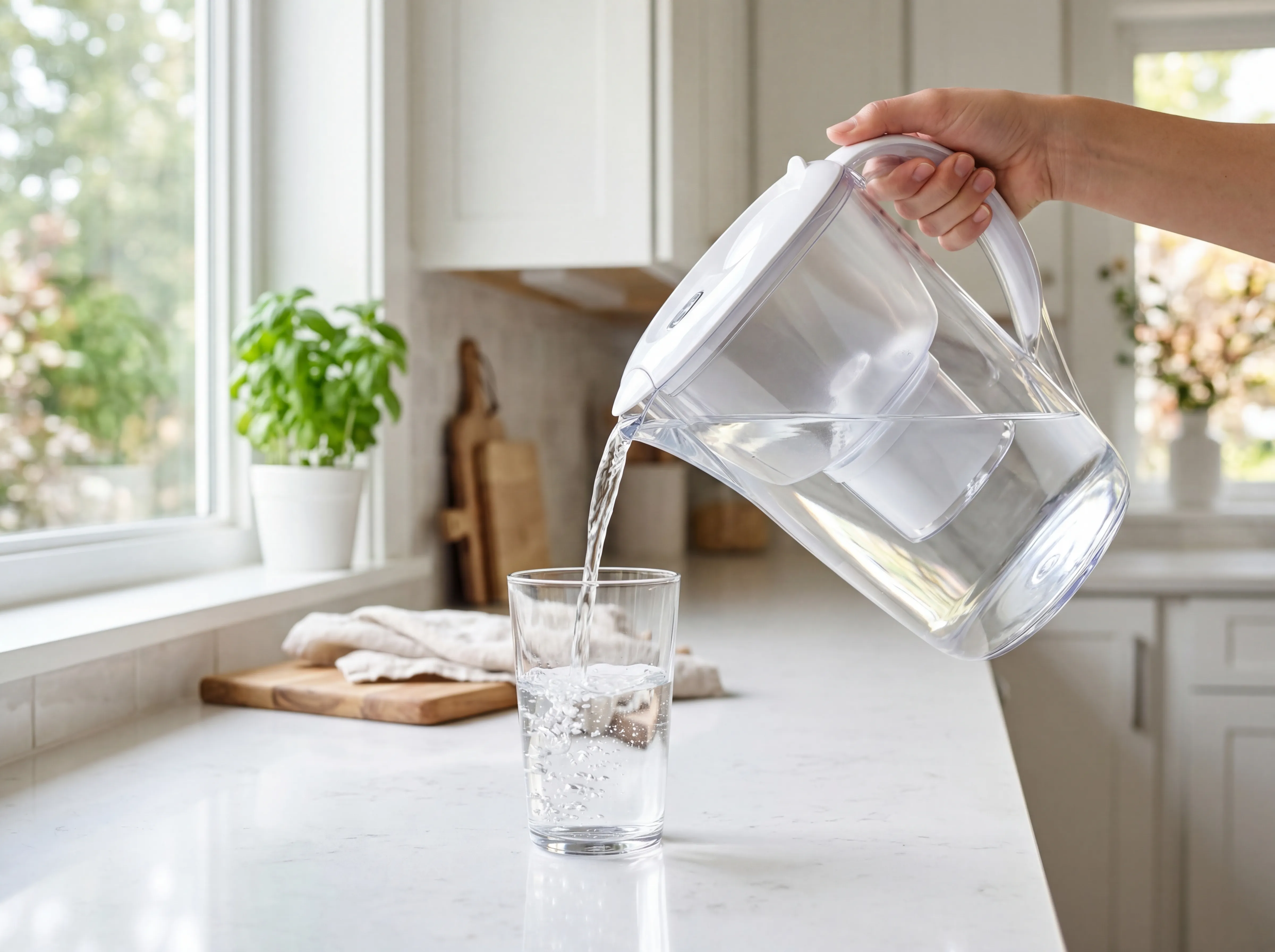
1. Clearly Filtered Water Pitcher - Best Overall Pitcher
Price: ~$90 (pitcher with one filter) | Replacement filters: ~$55 each | Filter life: 100 gallons (3-4 months)
The Clearly Filtered pitcher consistently tops PFAS removal tests. In EWG’s independent testing, it blocked 100% of the PFAS compounds tested. The company’s own lab data shows 99.8% reduction of PFOA, PFOS, GenX, and 13 other PFAS analytes, with results showing “not detected” after filtration.
It holds certifications to NSF/ANSI Standards 42, 53, 401, and P473. Beyond PFAS, it targets 365+ contaminants including lead, fluoride, arsenic, and microplastics without stripping beneficial minerals.
Pros:
- Highest PFAS removal rate among pitchers tested
- No installation, works right out of the box
- Removes fluoride and lead alongside PFAS
- BPA-free construction
Cons:
- Slow filtration speed compared to standard pitchers
- Replacement filters at $55 each add up ($165-$220 per year)
- 100-gallon filter life is shorter than some competitors
Best for: Anyone who wants the most thorough PFAS protection in a simple pitcher format and doesn’t mind paying more per gallon for it.
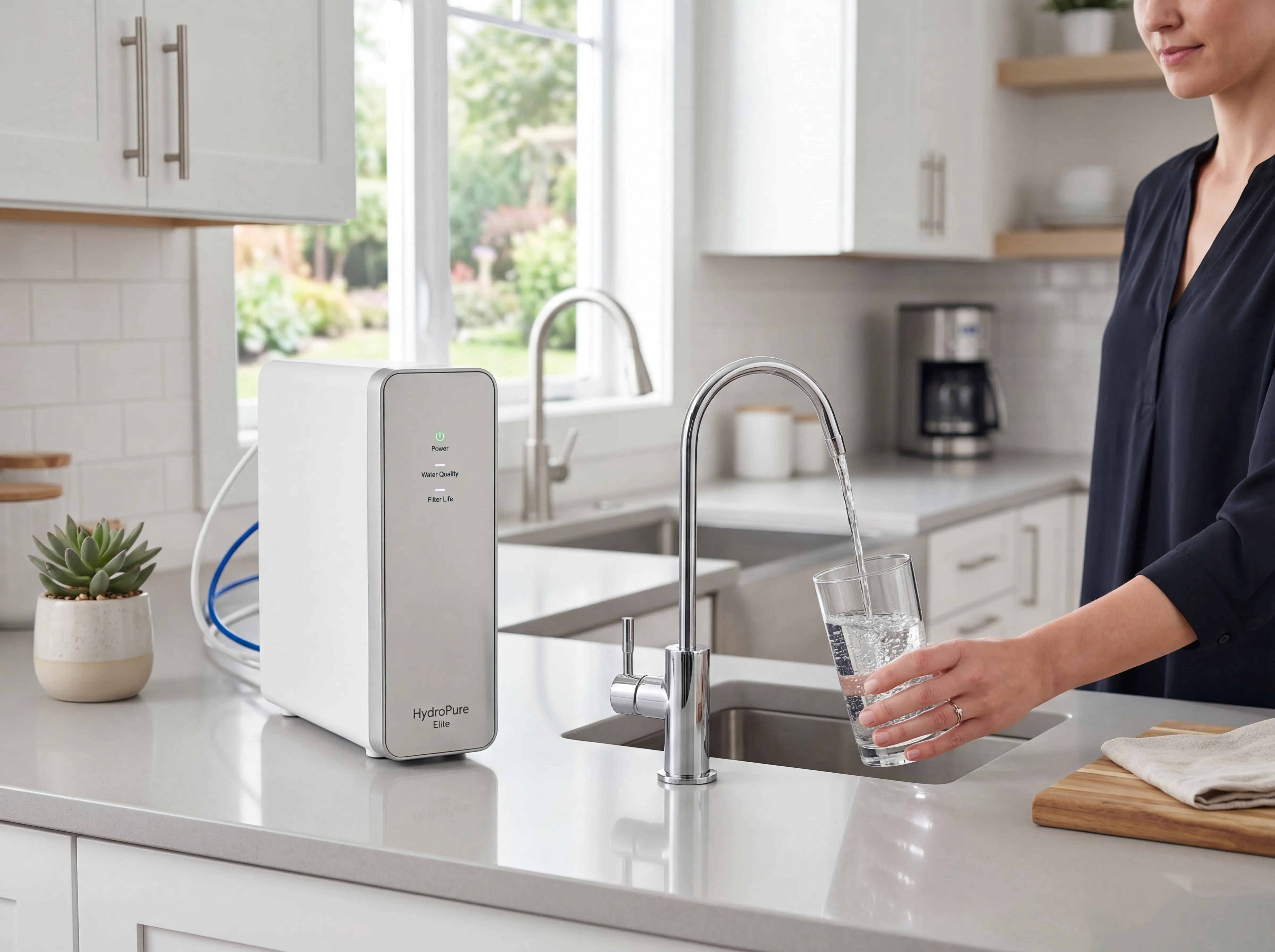
2. AquaTru Classic Countertop RO System - Best Countertop
Price: $449-$495 | Annual filter cost: ~$100 | Filter life: Pre-carbon 6 months, VOC 12 months, RO membrane 24 months
The AquaTru Classic is a countertop reverse osmosis system that needs zero plumbing. You fill the tank with tap water, and it pushes it through a 4-stage filtration process. Independent lab testing confirmed all 14 PFAS analytes came back as “not detected” after treatment.
It’s certified by IAPMO to NSF/ANSI Standard 53 for PFOA/PFOS reduction and verified to remove 83+ contaminants total, including lead, fluoride, chlorine, and pharmaceuticals. The cost per gallon works out to about $0.20-$0.25, which is far cheaper than bottled water.
Pros:
- True reverse osmosis performance without installation
- All 14 tested PFAS reduced to non-detect levels
- Reasonable ongoing costs (~$100/year for filters)
- Compact enough for most countertops
Cons:
- Higher upfront cost than pitchers
- Tank holds a limited amount of water (about 1 gallon at a time)
- Produces some wastewater (typical of RO systems)
- Takes up counter space
Best for: Families who want RO-level PFAS removal but rent their home or don’t want to deal with under-sink installation.
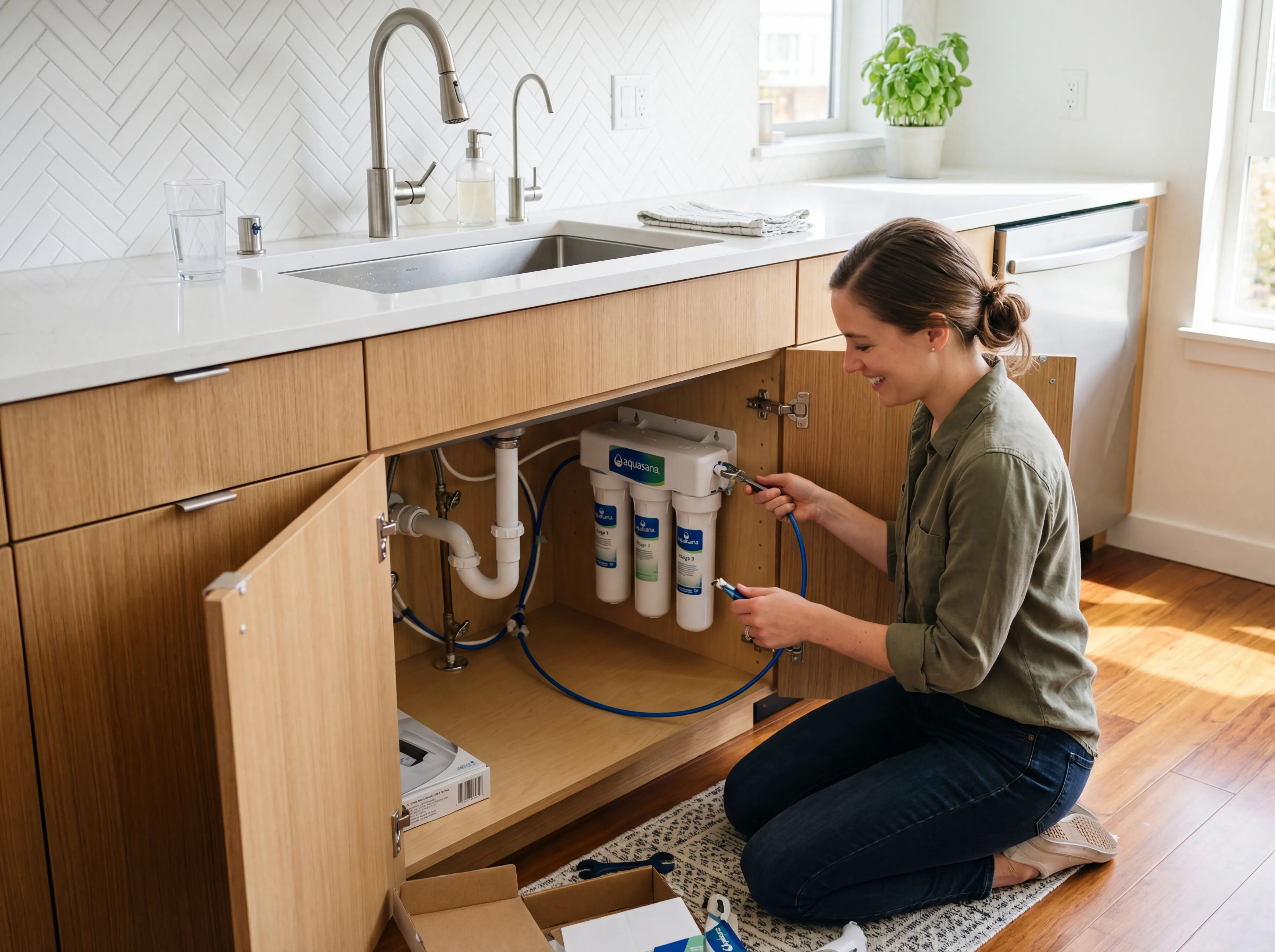
3. Waterdrop G3P800 Under-Sink RO - Best Under-Sink System
Price: ~$849 | Annual filter cost: ~$170 | Capacity: 800 gallons per day
The Waterdrop G3P800 is a tankless under-sink reverse osmosis system that delivers filtered water on demand. It fills a cup in about 6 seconds, which is dramatically faster than tank-based RO systems. Lab testing showed 100% removal of PFAS forever chemicals, and it carries NSF/ANSI 58 and 372 certifications for PFOA/PFOS reduction.
The 3:1 pure-to-drain ratio means you waste far less water than older RO systems (which typically run 1:3 or worse). An optional $30 remineralization filter adds back beneficial minerals. For more under-sink options, see our under-sink water filter guide.
Pros:
- 800 GPD capacity handles high-demand households
- 3:1 efficiency ratio wastes minimal water
- Tankless design saves cabinet space
- Extremely fast flow rate
Cons:
- $849 is a significant upfront investment
- Requires under-sink installation (DIY-friendly but still a project)
- Annual filter costs of $170 are higher than some competitors
- Removes minerals (remineralization filter sold separately)
Best for: Homeowners who want the best possible PFAS removal integrated into their kitchen plumbing, with fast flow and low water waste.
4. Epic Pure Water Filter Pitcher - Best Value Pitcher
Price: ~$69-$79 (with one filter) | Replacement filters: ~$36 | Filter life: 150 gallons (3-4 months)
The Epic Pure pitcher earned EWG’s “Best Overall” designation and CNN’s “Best Tested” label. It removes up to 99.9% of over 200 contaminants, including PFAS, fluoride, lead, chromium-6, and heavy metals. In lab testing, it eliminated chlorine taste, THMs, and trace lead to non-detect levels.
The 10-cup pitcher uses medical-grade Tritan plastic (BPA/BPS-free) and each filter lasts 150 gallons, which is 50% longer than the Clearly Filtered. At roughly $0.35 per gallon of filtered water, it sits in a sweet spot between performance and affordability.
Pros:
- Longer filter life (150 gallons) than Clearly Filtered
- Lower cost per gallon than most premium pitchers
- EWG and CNN recognized
- American-made filters
Cons:
- Not quite as comprehensive as Clearly Filtered for total contaminants tested
- Only one pitcher size available (10-cup)
- Initial cost runs 20-30% higher than basic pitchers
Best for: Budget-conscious buyers who still want serious PFAS protection and prefer a longer-lasting filter.
5. ZeroWater / Culligan ZeroWater Pitcher - Best Budget Option
Price: ~$35-$45 (pitcher) | Replacement filters: $13-$18 each | Filter life: 20 gallons
ZeroWater achieved 100% removal of tested PFAS compounds in EWG testing. It carries NSF 42, NSF 53, and NSF 401 certifications for every contaminant it claims to reduce. In lab tests, it completely eliminated fluoride, uranium, sulfate, nitrate, chlorine, and barium.
The catch? Filter life is only 20 gallons, which is dramatically shorter than competitors. At $0.90 per gallon, ongoing costs are high despite the low sticker price. A family of four could burn through a filter in under two weeks.
Pros:
- Lowest upfront cost among certified PFAS filters
- 100% PFAS removal verified by EWG
- 5-minute setup, no priming required
- Includes a TDS meter to monitor filter performance
Cons:
- 20-gallon filter life is the shortest on this list by far
- Highest ongoing cost per gallon ($0.90)
- Slow filtration rate (1.9 gallons per hour)
- Frequent filter replacements are wasteful and inconvenient
Best for: Someone on a tight budget who wants verified PFAS removal and doesn’t mind replacing filters frequently. Good as a starter filter while saving for a better long-term solution.
6. APEC ROES-50 Under-Sink RO System - Best Budget RO
Price: ~$200-$230 | Filter life: 6-12 months (pre-filters), 2-3 years (RO membrane)
The APEC ROES-50 Essence Series is a 5-stage reverse osmosis system that has been a reliable workhorse for years. Lab testing showed it reduced PFNA and PFBA (two PFAS subtypes) to undetectable levels, and it eliminated lead, arsenic, and uranium as well. It carries the WQA Gold Seal certifying compliance with NSF/ANSI Standard 58.
This is a traditional tank-based under-sink system, so it takes up more cabinet space than the Waterdrop. But it costs less than half the price while delivering comparable PFAS removal. For more options, see our full under-sink filter roundup.
Pros:
- Excellent PFAS removal at a budget-friendly price
- WQA Gold Seal / NSF 58 certified
- Long RO membrane life (2-3 years)
- Strong track record with thousands of verified reviews
Cons:
- Traditional tank design takes up significant cabinet space
- Higher water waste ratio than tankless systems
- Filter changes are less convenient than quick-twist designs
- Requires under-sink installation
Best for: Homeowners who want RO-quality PFAS removal without the premium price tag and don’t mind sacrificing some cabinet space.
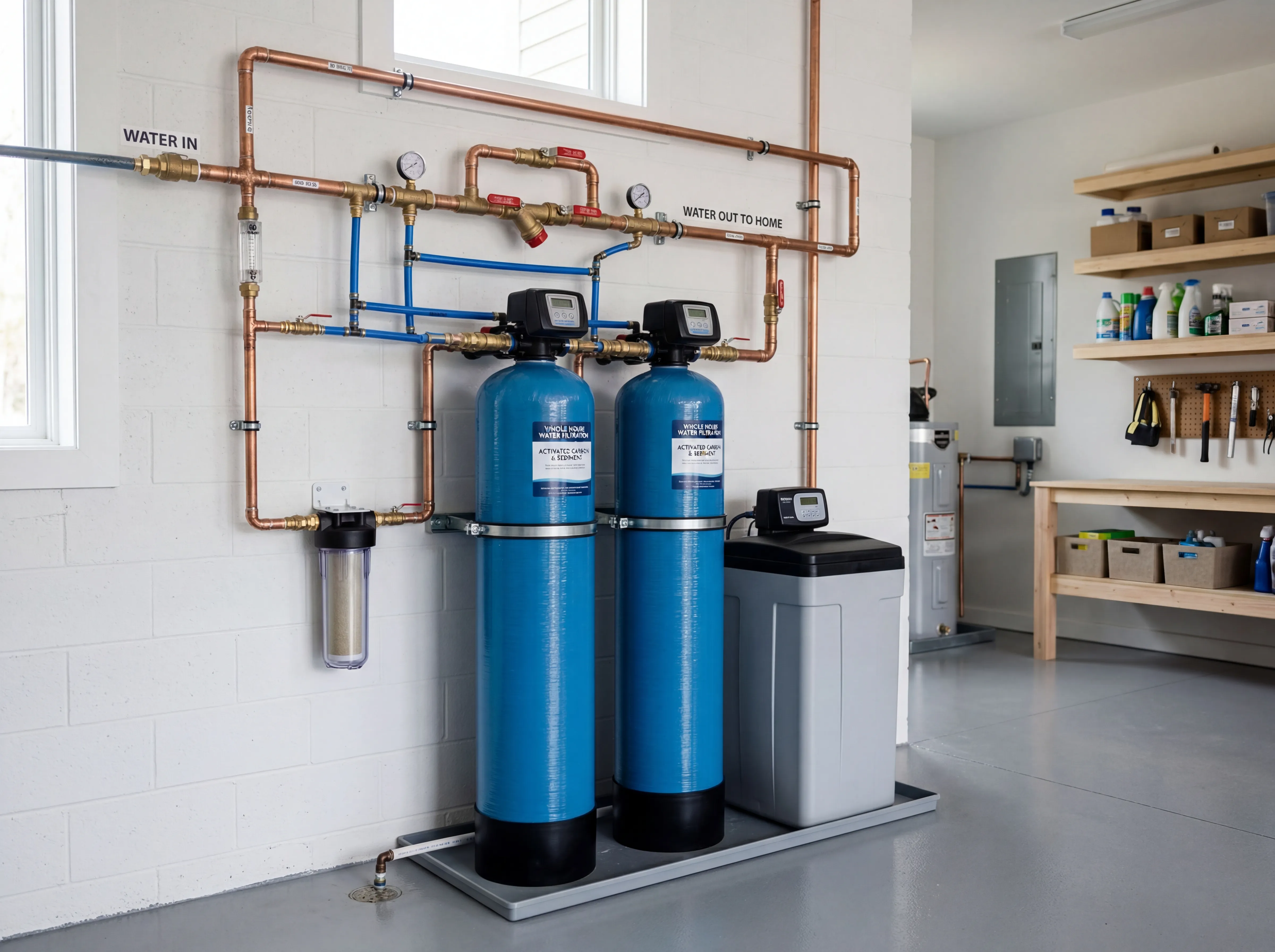
7. SpringWell Whole House PFAS Filter - Best Whole-House System
Price: ~$995 (PFAS filter system) | Cartridge life: Up to 350,000 gallons | Flow rate: 15 GPM
If you want PFAS removed from every tap, shower, and appliance in your home, a point-of-entry system like the SpringWell is the way to go. Their dedicated PFAS filter uses ATOMUS PF8 media, which is engineered specifically for PFAS and delivers over 25x the removal capacity of traditional carbon filters. It reduces PFAS to non-detect levels.
The system is designed for homes with 1-5 bathrooms and treats up to 350,000 gallons per cartridge. SpringWell backs it with a lifetime warranty on tanks and valves plus a 6-month money-back guarantee. For a broader look at whole-house options, check our whole-house water filter guide.
Pros:
- Filters all water entering your home, not just drinking water
- 350,000-gallon cartridge life means infrequent replacements
- PFAS reduced to non-detect with specialty media
- Lifetime warranty on tanks and valves
- 15 GPM flow rate handles high-demand households
Cons:
- $995 upfront plus $200-$500 for professional installation
- Only addresses PFAS; you may need additional filtration for other contaminants
- Requires a dedicated installation point on your main water line
Best for: Homeowners who want PFAS removed from their entire water supply, not just the kitchen tap. Especially valuable if you’re concerned about PFAS exposure through showering and bathing.
8. LifeStraw Home Pitcher - Best Glass Pitcher Design
Price: ~$55-$65 | Replacement filters (1-year supply): ~$60 | Filter life: 264 gallons (membrane), carbon filters replaced every 2 months
The LifeStraw Home stands out for its glass carafe design, which avoids the plastic contact issue that bothers many non-toxic living advocates. It reduces PFOA and PFOS by more than 99% and meets the NSF P473 standard. Its dual-stage system uses both a membrane microfilter and activated carbon to target bacteria, parasites, microplastics, lead, mercury, and PFAS.
However, independent lab testing raised concerns. While the pitcher handles PFAS and microplastics well, it failed to adequately remove uranium, arsenic, lithium, and several other serious contaminants. It’s a strong choice for PFAS specifically, but not a comprehensive solution if your water has multiple contamination issues.
Pros:
- Beautiful glass design (no plastic water contact)
- 99%+ PFAS reduction
- Membrane microfilter lasts a full year (264 gallons)
- Also removes bacteria and parasites, which most pitchers don’t
Cons:
- Poor performance on arsenic, uranium, and lithium
- Carbon filters need replacing every 2 months
- Glass carafe is breakable
- Mixed independent test results for overall contaminant removal
Best for: People who prioritize a non-plastic design and are primarily concerned about PFAS, microplastics, and biological contaminants rather than heavy metals.
Comparison Table
| Filter | Type | Price | PFAS Removal | Certification | Filter Life | Annual Cost |
|---|---|---|---|---|---|---|
| Clearly Filtered | Pitcher | $90 | 99.8% | NSF 53, P473 | 100 gal | $165-$220 |
| AquaTru Classic | Countertop RO | $449-$495 | Non-detect | NSF 53 (IAPMO) | 6-24 mo | ~$100 |
| Waterdrop G3P800 | Under-sink RO | $849 | 100% | NSF 58, 372 | Varies | ~$170 |
| Epic Pure | Pitcher | $69-$79 | 99.9% | NSF tested | 150 gal | ~$108 |
| ZeroWater | Pitcher | $35-$45 | 100% | NSF 42, 53, 401 | 20 gal | $300+ |
| APEC ROES-50 | Under-sink RO | $200-$230 | Non-detect | NSF 58 (WQA) | 6-36 mo | ~$60-$80 |
| SpringWell PFAS | Whole house | $995 | Non-detect | Tested | 350,000 gal | ~$40 |
| LifeStraw Home | Pitcher (glass) | $55-$65 | 99%+ | NSF P473 | 264 gal | ~$60 |
Does Brita Remove PFAS?
This is one of the most common questions people ask, so here’s the straight answer.
Standard Brita filters are not designed for PFAS removal. Testing showed the standard Brita pitcher reduced PFAS by only about 66%, and results varied widely.
The Brita Elite filter is NSF 53-certified for PFOA/PFOS reduction, which sounds promising. But real-world testing told a different story: one test showed only 22% PFAS reduction with the Elite filter. The problem is that Brita’s activated carbon isn’t dense enough or in contact with water long enough to reliably capture those tiny, stable PFAS molecules.
If you already own a Brita, upgrading to Elite filters will give you some PFAS reduction, but it’s not in the same league as the Clearly Filtered, Epic Pure, or ZeroWater pitchers. For serious PFAS protection, you need a filter built for the job.
Brita does offer a Brita PRO whole-home PFAS system with proprietary titanium housing, which is a completely different product from their consumer pitchers. That system is IAPMO-certified to NSF P473 and performs well, but it requires professional installation and costs significantly more.
Do Refrigerator Filters Remove PFAS?
Short answer: not well enough.
Fridge filters use basic granular activated carbon. According to NSF data, they remove roughly 29-65% of short-chain PFAS and 57-72% of long-chain PFAS. That’s partial reduction, not reliable removal.
If your water has PFAS above EPA limits, a fridge filter alone won’t bring it into compliance. You’ll want a dedicated point-of-use filter (like any of the eight reviewed above) for your drinking water, or an under-sink RO system connected to a dedicated faucet.
How to Know If Your Water Has PFAS
Before buying a filter, it’s worth knowing what’s actually in your water. You have a few options:
- Check the EWG Tap Water Database at ewg.org/tapwater. Enter your zip code to see reported contaminants including PFAS.
- Order a home water test from Tap Score or SimpleLab. Their PFAS-specific tests run $200-$350 and measure individual PFAS compounds.
- Request your utility’s Consumer Confidence Report (CCR), which is published annually. Many now include PFAS data.
For a step-by-step walkthrough, see our guide on how to test your water quality.
FAQ
What is the best type of water filter for PFAS?
Reverse osmosis is the most effective technology, removing 94-99%+ of both short-chain and long-chain PFAS. High-quality activated carbon block filters (certified to NSF 53 for PFAS) are the next best option and tend to be cheaper. Standard carbon filters, faucet-mount filters, and refrigerator filters provide incomplete PFAS removal.
How much do PFAS water filters cost?
Pitcher filters start around $35 (ZeroWater) to $90 (Clearly Filtered). Countertop RO systems like the AquaTru Classic run $449-$495. Under-sink RO systems range from $200 (APEC ROES-50) to $849 (Waterdrop G3P800). Whole-house PFAS filters like the SpringWell cost around $995 plus installation.
Do I need a whole-house filter for PFAS, or is a drinking water filter enough?
For most people, a point-of-use filter (pitcher, countertop, or under-sink) covers the primary exposure route, which is drinking water. A whole-house system makes sense if you’re concerned about PFAS absorption through skin during showers, though research on dermal PFAS exposure is still developing. It also protects appliances and makes every tap in your home deliver filtered water.
Can I use a water filter pitcher to remove PFAS?
Yes, but only certain pitchers. The Clearly Filtered, Epic Pure, and ZeroWater pitchers are all independently verified to remove 99%+ of tested PFAS compounds. Standard Brita and PUR pitchers are not effective for PFAS removal.
How often should I replace my PFAS water filter?
Follow the manufacturer’s recommended schedule. Overused filters lose their ability to capture contaminants. For pitchers, that’s typically every 2-4 months. For RO membranes, every 2-3 years. Running a filter past its rated capacity can actually release trapped contaminants back into your water.
What are the NSF certifications I should look for?
Look for NSF/ANSI 53 on carbon-based filters or NSF/ANSI 58 on reverse osmosis systems, with PFOA/PFOS specifically listed on the certification. The older NSF P473 standard has been incorporated into these two standards but you may still see it on some product labels.
Is bottled water free of PFAS?
Not necessarily. Some bottled water brands have tested positive for PFAS. Bottled water is also significantly more expensive per gallon than filtered tap water, and it generates plastic waste that contributes to the contamination cycle. A home filter is more reliable, more economical, and better for the environment.
Does boiling water remove PFAS?
No. PFAS are heat-stable and do not evaporate or break down at boiling temperatures. Boiling your water actually concentrates PFAS because some water evaporates while the PFAS stay behind. The only effective methods are physical filtration (RO, carbon block) and chemical adsorption (ion exchange, specialty media).
Bottom Line
If you just want a straightforward recommendation: get the Clearly Filtered pitcher if you want simplicity, the AquaTru Classic if you want the best countertop solution, or the APEC ROES-50 if you want affordable under-sink RO. All three remove PFAS to non-detect or near-non-detect levels, and all carry relevant NSF certifications.
The most important thing is choosing a filter that’s actually certified for PFAS. A generic “carbon filter” label means nothing for forever chemicals. Check for NSF 53 or NSF 58 with PFAS claims, verify the filter is within its rated capacity, and replace it on schedule. Your filter is only as good as the cartridge inside it.