Reverse osmosis is the single most effective filtration technology you can install at home. It removes 90 to 99% of PFAS, lead, arsenic, fluoride, microplastics, and hundreds of other contaminants that standard carbon filters miss. If your water test came back ugly, or you just want the cleanest drinking water possible, an RO system is the answer.
I spent weeks comparing eight of the top-rated reverse osmosis systems across three categories: traditional under-sink, countertop, and tankless. Below you will find specific model numbers, current prices, waste water ratios, filter replacement costs, and real performance data so you can pick the right system without second-guessing yourself.
Quick Picks
| Category | Model | Price | GPD | Best For |
|---|---|---|---|---|
| Best Overall | Waterdrop G3P800 | ~$699 | 800 | Performance and efficiency |
| Best Value Under-Sink | APEC ROES-50 | ~$199 | 50 | Proven filtration on a budget |
| Best with Remineralization | iSpring RCC7AK | ~$270 | 75 | Alkaline mineral-rich water |
| Best Countertop | AquaTru Classic | ~$449 | N/A | Renters, no installation |
| Best Compact Countertop | AquaTru Carafe | ~$349 | N/A | Small kitchens, glass carafe |
| Best Premium Under-Sink | Home Master TMAFC-ERP | ~$430 | 75 | Low maintenance, 1:1 waste ratio |
| Best Budget Tankless | SimPure T1-400 | ~$180 | 400 | Affordable tankless with UV |
| Best Budget Traditional | Express Water RO5DX | ~$165 | 50 | First-time RO buyers |
How Reverse Osmosis Works (30-Second Version)
RO systems push water through a semipermeable membrane with pores as small as 0.0001 microns. That is roughly 500,000 times smaller than a human hair. Water molecules pass through; contaminants do not.
Most systems add pre-filters (sediment, carbon block) before the membrane and a post-filter (activated carbon or remineralization) after it. The membrane rejects contaminants into a waste stream that goes down the drain.
The two numbers that matter most:
- GPD (gallons per day): How much filtered water the system produces. Traditional tank systems run 50 to 75 GPD. Tankless models hit 400 to 800 GPD.
- Pure-to-drain ratio: How much water is wasted. A 3:1 ratio means 3 gallons of clean water for every 1 gallon wasted. A 1:3 ratio (common in older tank systems) means 1 gallon clean for every 3 wasted.
If you are specifically concerned about PFAS forever chemicals in your tap water, RO is your strongest line of defense. EPA research confirms reverse osmosis removes up to 99% of PFAS compounds, including both long-chain and short-chain varieties.
8 Best Reverse Osmosis Systems: Detailed Reviews
1. Waterdrop G3P800: Best Overall Tankless RO System
Price: ~$699 (frequently on sale from $1,099) Type: Tankless, under-sink GPD: 800 Pure-to-drain ratio: 3:1 Stages: 10 Certifications: NSF/ANSI 42, 53, 58, 372
The Waterdrop G3P800 fills a cup in about 5 seconds. That speed alone sets it apart from every tank-based system on this list. Its 10-stage filtration process removes over 1,000 contaminants, including PFOA, PFOS, lead, arsenic, chromium, fluoride, and chlorine.
The smart LED faucet displays real-time TDS readings so you always know your water quality. Some models include a UV sterilizer that kills 99.9% of bacteria. The unit is compact enough to fit under most sinks without eating your entire cabinet.
Filter schedule and costs:
- CF filter: every 6 months (~$30)
- CB filter: every 12 months (~$40)
- RO membrane: every 24 months (~$80)
- Estimated annual filter cost: ~$100
Pros:
- Fastest flow rate on this list (800 GPD)
- 3:1 pure-to-drain ratio saves water
- Smart faucet with TDS display
- Compact tankless design
- 30-minute DIY installation
Cons:
- Higher upfront cost than tank-based systems
- Requires electricity
- Filter replacements are proprietary
2. APEC ROES-50: Best Value Under-Sink System
Price: ~$199 Type: Traditional tank, under-sink GPD: 50 Pure-to-drain ratio: 1:3 Stages: 5 Certifications: WQA Gold Seal
The APEC ROES-50 has been a best-seller for years, and for good reason. In lab testing, it reduced lead, PFNA, arsenic, and uranium to completely undetectable levels. At under $200, no other system matches that performance at this price point.
The five stages include three pre-filters, a high-rejection TFC RO membrane, and a coconut shell carbon post-filter. APEC manufactures their own filters in the USA, which keeps replacement costs low.
Filter schedule and costs:
- Pre-filters (stages 1-3): every 6 to 12 months (~$30)
- RO membrane: every 2 to 3 years (~$40)
- Post-filter: every 12 months (~$20)
- Estimated annual filter cost: ~$50
Pros:
- Exceptional contaminant removal at a budget price
- Lowest annual filter cost on this list (~$50/year)
- WQA Gold Seal certified
- USA-made filters
- Reliable track record over many years
Cons:
- 1:3 pure-to-drain ratio wastes significant water
- Tank takes up substantial cabinet space
- Slower flow compared to tankless systems
- No remineralization stage
3. iSpring RCC7AK: Best Under-Sink with Remineralization
Price: ~$270 Type: Traditional tank, under-sink GPD: 75 Pure-to-drain ratio: 1:3 Stages: 6 (5 + alkaline remineralization) Certifications: NSF/ANSI 58
The iSpring RCC7AK does everything the APEC does, then adds a sixth stage: an alkaline remineralization filter that restores calcium, magnesium, and other minerals stripped out by the RO membrane. The result is water with a slightly higher pH and a noticeably smoother taste.
It removes 99%+ of PFAS (including PFOA and PFOS), lead, fluoride, arsenic, chlorine, and over 1,000 other contaminants. The 75 GPD output is 50% faster than the APEC’s 50 GPD.
Filter schedule and costs:
- Pre-filters: every 6 to 12 months (~$25)
- RO membrane: every 2 to 3 years (~$35)
- Post-filter and AK filter: every 12 months (~$25)
- Estimated annual filter cost: ~$50 to $70
Pros:
- Alkaline remineralization improves taste and adds minerals back
- NSF/ANSI 58 certified
- 75 GPD is faster than most budget systems
- Affordable filter replacements
- Strong PFAS reduction
Cons:
- Same 1:3 waste ratio as other tank systems
- Takes up significant under-sink space
- Tank can develop bacterial growth if not maintained
- Remineralization filter needs replacement every 12 months
4. AquaTru Classic: Best Countertop RO System
Price: ~$449 Type: Countertop GPD: N/A (batch processing) Pure-to-drain ratio: 4:1 Stages: 4 Certifications: NSF/ANSI 42, 53, 58, 401
The AquaTru Classic is the best option for renters or anyone who does not want to drill into their plumbing. Zero installation required. Fill the tank with tap water, press a button, and the system handles the rest.
It is IAPMO certified for reduction of 83 contaminants, including lead, chromium 6, chlorine, fluoride, PFAS, and microplastics. The 4:1 recovery rate means only 1 gallon wasted for every 4 gallons purified, which is significantly better than most under-sink systems.
The clean water tank holds about 3 quarts, which covers daily drinking for one or two people. If you are cooking for a family, expect to refill it often.
Filter schedule and costs:
- Pre-filter: every 6 months (~$25)
- Carbon/VOC filter: every 6 months (~$25)
- RO membrane: every 24 months (~$50)
- Estimated annual filter cost: ~$75 to $100
- Per-gallon cost: ~$0.11
Pros:
- No plumbing or installation needed
- Best waste ratio on this list (4:1)
- Certified for 83 contaminants
- Portable, great for renters
- App-connected smart tracking on newer models
Cons:
- Limited capacity (3-quart clean tank)
- Slow batch processing, not on-demand
- Takes up counter space
- Higher upfront cost for what you get
5. AquaTru Carafe: Best Compact Countertop
Price: ~$349 Type: Countertop with glass carafe GPD: N/A (batch processing) Pure-to-drain ratio: 4:1 Stages: 4 Certifications: NSF/ANSI 42, 53, 58, 401
The AquaTru Carafe uses the same reverse osmosis core as the Classic but delivers filtered water into a removable borosilicate glass carafe instead of a plastic tank. That glass carafe is a real selling point for anyone avoiding plastic contact with their drinking water.
At 13” x 14” x 7.5” and 9 lbs, it has a smaller footprint than the Classic. The 0.5-gallon glass carafe fits in your refrigerator for cold filtered water on demand. Filtration time runs about 10 to 15 minutes per half gallon.
Filter schedule and costs:
- Pre-filter and carbon filter: every 6 months (~$30)
- RO membrane: every 24 months (~$50)
- Estimated annual filter cost: ~$85
- Per-gallon cost: ~$0.19
Pros:
- Glass carafe eliminates plastic contact
- Same proven RO filtration as the Classic
- Compact and portable
- Refrigerator-friendly carafe
- 4:1 pure-to-drain ratio
Cons:
- Smaller capacity than the Classic (0.5 gal vs 0.75 gal)
- Slightly higher per-gallon cost
- Filters are not interchangeable with Classic model
- Not ideal for families or high-volume use
6. Home Master TMAFC-ERP: Best Premium Under-Sink System
Price: ~$430 Type: Traditional tank, under-sink GPD: 75 Pure-to-drain ratio: 1:1 Stages: 7 Certifications: NSF/ANSI 58 Warranty: 5-year limited parts
The Home Master TMAFC-ERP stands out with its patented 2-pass alkaline remineralization. Water contacts the remineralization media twice during the filtration process, producing consistently mineral-rich water with a balanced pH. Most competing systems only remineralize once.
The included permeate pump achieves a 1:1 waste-to-pure ratio without using electricity. That is a substantial improvement over the 1:3 ratio found in the APEC and iSpring models. It also removes up to 99% of chlorine, chloramines, lead, fluoride, pharmaceuticals, and microplastics.
The modular filter design uses oversized filters that last a full 12 months, so you only change filters once per year.
Filter schedule and costs:
- All filters: every 12 months (~$90 for the full set)
- RO membrane: every 3 to 5 years (~$50)
- Estimated annual filter cost: ~$100
Pros:
- 1:1 waste ratio (best among tank-based systems)
- Patented 2-pass remineralization
- No electricity needed (permeate pump is non-electric)
- Annual filter changes only (not every 6 months)
- 5-year limited parts warranty
Cons:
- Higher upfront cost ($430)
- Occasional pump noise
- Bulkier than some competitors
- Filter changes can be slightly tricky
7. SimPure T1-400: Best Budget Tankless System
Price: ~$180 Type: Tankless, under-sink GPD: 400 Pure-to-drain ratio: 1.5:1 Stages: 8 Certifications: NSF/ANSI 58 (SGS tested)
The SimPure T1-400 delivers tankless performance at a price that undercuts most tank-based systems. At around $180, it is the most affordable tankless RO system worth buying. The 400 GPD output and 1.5:1 pure-to-drain ratio put it well ahead of traditional 50 GPD tank systems in both speed and efficiency.
The 8-stage filtration removes 99.99% of over 1,000 contaminants, including PFAS (PFOA/PFOS), lead, arsenic, fluoride, and chloride. The UV variant (T1-400UV) adds ultraviolet sterilization. There is also an alkaline model (T1-400ALK) with a remineralization stage.
The tankless design saves roughly 70% of under-sink space compared to traditional tank systems.
Filter schedule and costs:
- Pre-filter/carbon filter: every 6 to 12 months (~$25)
- RO membrane: every 12 to 24 months (~$50)
- Estimated annual filter cost: ~$75 to $100
Pros:
- Remarkably affordable for a tankless system
- 400 GPD with 1.5:1 waste ratio
- Compact, space-saving design
- UV and alkaline variants available
- Quick-change twist filters
Cons:
- Requires electricity
- Lower flow rate than the Waterdrop G3P800
- Less established brand reputation
- 0.28 GPM flow rate is slower than premium tankless models
8. Express Water RO5DX: Best Budget Traditional System
Price: ~$165 Type: Traditional tank, under-sink GPD: 50 Pure-to-drain ratio: 1:3 Stages: 5 Certifications: NSF 58
The Express Water RO5DX is the least expensive system on this list, and it still delivers solid filtration. It reduces up to 99.99% of lead, chlorine, fluoride, PFAS, calcium, and arsenic. The system ships with all four filters needed for setup and the first year of use, so there are no hidden costs at purchase.
A built-in leak stop valve automatically shuts off water flow if excess water is detected, which is a nice safety feature at this price. The deluxe chrome faucet has a brass waterway for clean water delivery.
Filter schedule and costs:
- Pre-filters (stages 1-3): every 6 to 12 months (~$25)
- RO membrane: every 2 to 3 years (~$35)
- Post-filter: every 12 months (~$15)
- Estimated annual filter cost: ~$50 to $65
Pros:
- Lowest price on this list
- Includes first year of filters
- Leak stop valve for safety
- Easy DIY installation
- Good customer service reputation
Cons:
- 1:3 waste ratio
- Basic feature set
- 1-year warranty is shorter than competitors
- 50 GPD is slow for larger households
Under-Sink vs. Countertop vs. Tankless: Which Type Should You Choose?
Under-Sink (Tank-Based)
Traditional under-sink systems like the APEC ROES-50 and iSpring RCC7AK store filtered water in a pressurized tank. They are the most affordable option, typically $165 to $430. The downside: they waste more water (1:3 ratio is common), take up cabinet space, and produce water more slowly. These work well for households of 1 to 3 people who primarily want clean drinking and cooking water.
Best for: Budget-conscious buyers, homeowners comfortable with basic plumbing, smaller households.
Countertop
Countertop systems like the AquaTru Classic and Carafe require zero installation. Fill the reservoir with tap water, and the system filters it in batches. They waste less water (4:1 ratio) but produce water slowly and in limited quantities. They are also portable, making them ideal for renters.
Best for: Renters, apartment dwellers, anyone who moves frequently, people who want to avoid plumbing work.
Tankless (Under-Sink)
Tankless systems like the Waterdrop G3P800 and SimPure T1-400 filter water on demand without a storage tank. They deliver faster flow rates (400 to 800 GPD), waste less water (1.5:1 to 3:1 ratio), and take up minimal cabinet space. The trade-off is higher upfront cost and the need for an electrical outlet under your sink.
Best for: Families, anyone who wants fast-flowing filtered water, people who prioritize water efficiency. If your primary concern is removing PFAS from your water, tankless systems offer the best combination of performance and convenience.
Cost Analysis: Upfront Price + Ongoing Filter Costs
The true cost of an RO system is not just the sticker price. Filter replacements add up over time. Here is a 5-year cost breakdown:
| System | Upfront | Annual Filters | 5-Year Total |
|---|---|---|---|
| Express Water RO5DX | $165 | ~$55 | ~$440 |
| APEC ROES-50 | $199 | ~$50 | ~$449 |
| SimPure T1-400 | $180 | ~$85 | ~$605 |
| iSpring RCC7AK | $270 | ~$60 | ~$570 |
| AquaTru Carafe | $349 | ~$85 | ~$774 |
| Brondell Circle | $399 | ~$80 | ~$799 |
| Home Master TMAFC-ERP | $430 | ~$100 | ~$930 |
| AquaTru Classic | $449 | ~$85 | ~$874 |
| Waterdrop G3P800 | $699 | ~$100 | ~$1,199 |
The APEC ROES-50 wins on total cost of ownership. But if you factor in water waste (the APEC wastes 3 gallons for every 1 filtered), tankless systems like the SimPure T1-400 can offset their higher price through lower water bills over time.
Full Comparison Table
| Feature | Waterdrop G3P800 | APEC ROES-50 | iSpring RCC7AK | AquaTru Classic | AquaTru Carafe | Home Master TMAFC-ERP | SimPure T1-400 | Express Water RO5DX |
|---|---|---|---|---|---|---|---|---|
| Price | ~$699 | ~$199 | ~$270 | ~$449 | ~$349 | ~$430 | ~$180 | ~$165 |
| Type | Tankless | Tank | Tank | Countertop | Countertop | Tank | Tankless | Tank |
| GPD | 800 | 50 | 75 | Batch | Batch | 75 | 400 | 50 |
| Stages | 10 | 5 | 6 | 4 | 4 | 7 | 8 | 5 |
| Pure:Drain | 3:1 | 1:3 | 1:3 | 4:1 | 4:1 | 1:1 | 1.5:1 | 1:3 |
| Remineralization | Optional | No | Yes | No | No | Yes (2-pass) | Optional | No |
| PFAS Removal | Yes | Yes | Yes | Yes | Yes | Yes | Yes | Yes |
| UV Sterilization | Optional | No | No | No | No | No | Optional | No |
| Installation | Under-sink | Under-sink | Under-sink | None | None | Under-sink | Under-sink | Under-sink |
| Electricity | Yes | No | No | Yes | Yes | No | Yes | No |
| Warranty | 1 year | 1 year | 1 year | 1 year | 1 year | 5 years | 1 year | 1 year |
| Annual Filter Cost | ~$100 | ~$50 | ~$60 | ~$85 | ~$85 | ~$100 | ~$85 | ~$55 |
What Contaminants Does Reverse Osmosis Remove?
Every system on this list removes the following categories of contaminants:
- PFAS/PFOS/PFOA: 90 to 99% removal. RO is one of only three home filtration methods proven effective against PFAS.
- Lead: 95 to 99%+ removal across all tested systems.
- Arsenic: 95 to 99% removal.
- Fluoride: 93 to 99% removal. RO is the most reliable method for fluoride reduction.
- Chlorine and chloramines: 95 to 99% through carbon pre-filters and the membrane.
- Microplastics: Near-complete removal due to the 0.0001-micron membrane pore size. Learn more about microplastics in drinking water.
- Nitrates: 90 to 95% removal.
- Pharmaceuticals and hormones: 95 to 99% removal.
- TDS (total dissolved solids): 90 to 99% reduction.
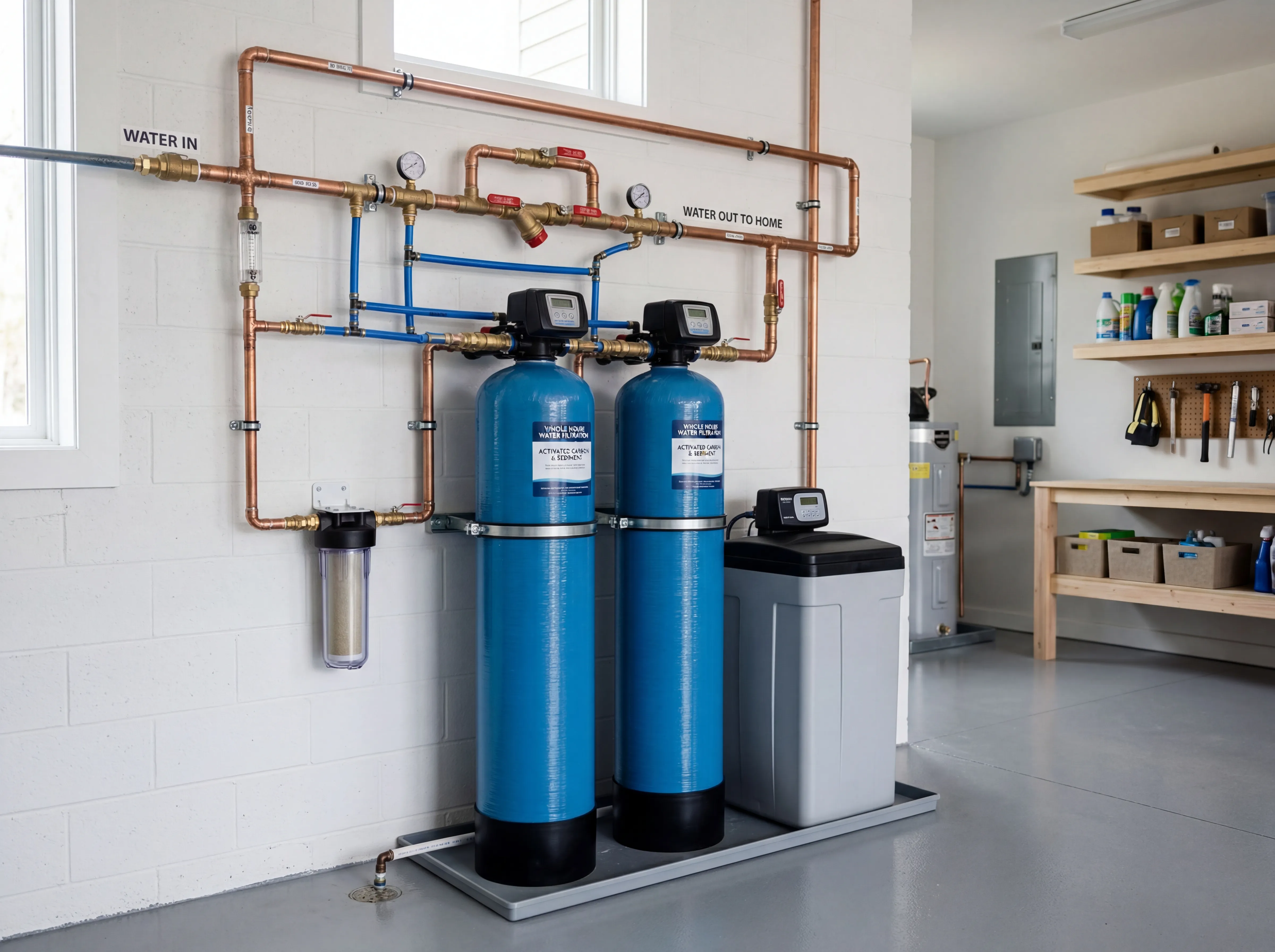
For broader home water filtration beyond the kitchen sink, see our guide to whole house water filters. And if you want to compare RO to other technologies specifically for PFAS, check out our best water filters for PFAS removal.
The Remineralization Question
Pure RO water has almost zero mineral content. Some people find it tastes flat. More importantly, stripping calcium and magnesium from your drinking water means you lose a potential dietary source of those minerals.
Three systems on this list address this with built-in remineralization:
- iSpring RCC7AK: Single-pass alkaline remineralization filter adds calcium and magnesium, raising pH to approximately 7.5 to 8.5.
- Home Master TMAFC-ERP: Patented 2-pass system contacts remineralization media twice for more consistent mineral addition.
- Waterdrop G3P800 (alkaline variant): Available in a remineralization version that adds minerals back after filtration.
If your system does not include remineralization, you can add mineral drops to your filtered water or install an inline remineralization filter for $25 to $40.
FAQ
How long does a reverse osmosis membrane last?
Most RO membranes last 2 to 3 years with normal household use. Premium systems like the Home Master TMAFC-ERP can extend membrane life to 3 to 5 years. Pre-filters protect the membrane from sediment and chlorine damage, so keeping those fresh is the best way to extend membrane life.
Does reverse osmosis waste a lot of water?
Traditional tank systems waste 3 gallons for every 1 gallon filtered (1:3 ratio). Tankless systems are far more efficient. The Waterdrop G3P800 produces 3 gallons of clean water for every 1 gallon wasted. The AquaTru countertop models achieve a 4:1 ratio. If water efficiency matters to you, avoid traditional tank-based systems.
Do I need a plumber to install an under-sink RO system?
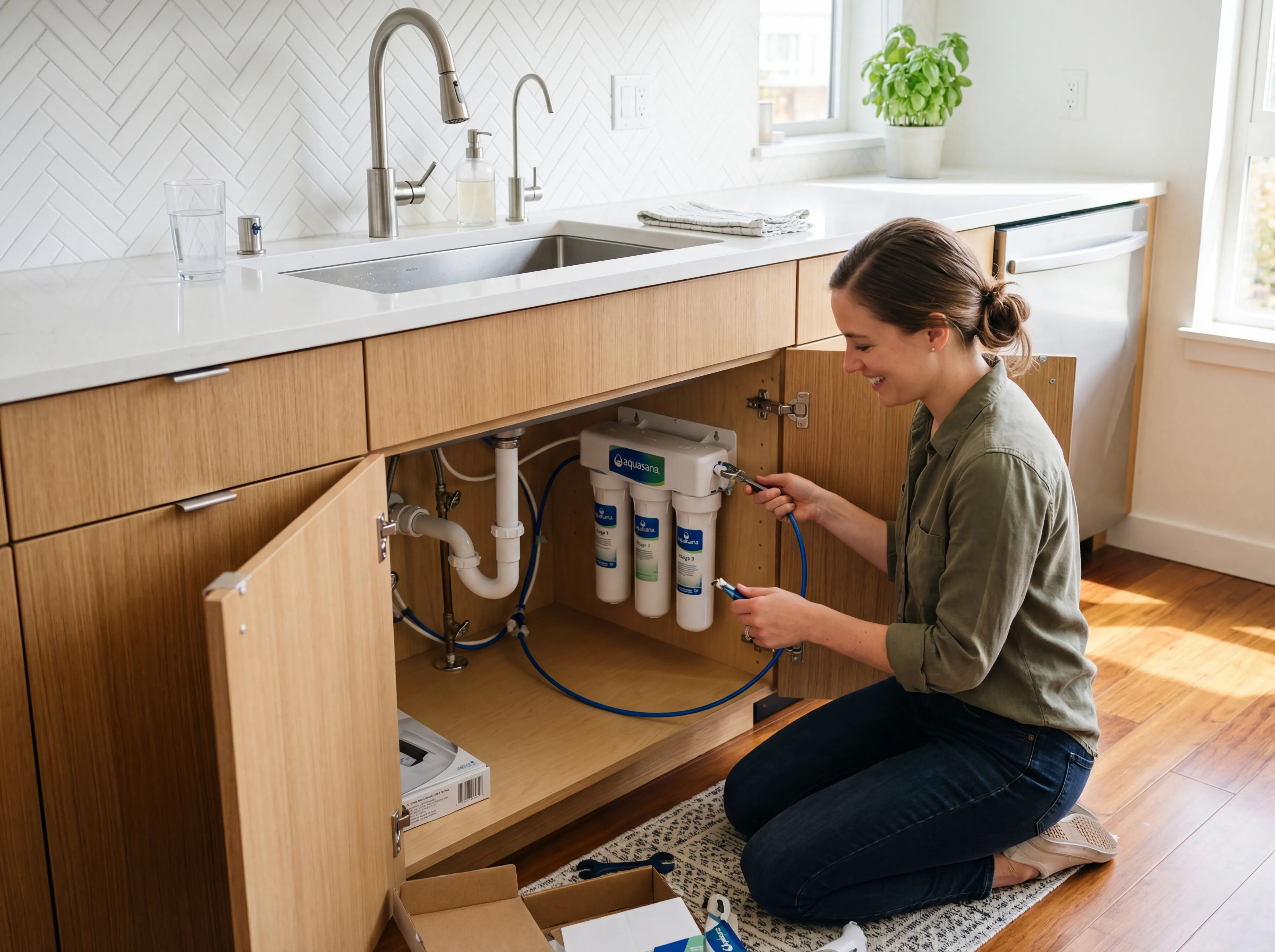
No. Every under-sink system on this list is designed for DIY installation. Most people complete the job in 30 to 60 minutes with basic hand tools. The process involves connecting a feed water adapter to your cold water line, mounting the system and tank under the sink, and installing a dedicated faucet on your countertop or sink deck.
Can I use RO water for my coffee machine or refrigerator?
Yes, but pure RO water (without remineralization) can taste flat in coffee. Many specialty coffee enthusiasts add mineral packets to RO water for optimal extraction. For refrigerator connections, you will need an additional line from the RO system, which most manufacturers sell as an accessory kit.
Is a tankless RO system better than a tank system?
For most households, yes. Tankless systems deliver water on demand, waste less water, take up less space, and do not risk bacterial growth in a storage tank. The only reasons to choose a tank system are lower upfront cost and not needing an electrical outlet under your sink.
Does reverse osmosis remove PFAS effectively?
Yes. Reverse osmosis removes 90 to 99% of PFAS compounds. EPA research confirms it is effective against both long-chain PFAS (like PFOA and PFOS) and harder-to-remove short-chain varieties. Every system reviewed in this article is capable of significant PFAS reduction. For a deeper look at PFAS filtration options, see our complete guide to PFAS water filters.
How often should I test my water after installing an RO system?
Test your filtered water every 6 months with a TDS meter (around $15 on Amazon). If TDS readings start climbing back up, your membrane likely needs replacement. Systems like the Waterdrop G3P800 have built-in TDS monitoring, which takes the guesswork out of this step.
Do RO systems remove healthy minerals?
Yes, RO removes essentially all dissolved minerals, including beneficial calcium and magnesium. If this concerns you, choose a system with built-in remineralization (iSpring RCC7AK, Home Master TMAFC-ERP) or add a standalone remineralization filter. The mineral content in tap water varies so widely by region that many people get negligible minerals from water anyway, relying on food for those nutrients instead.
Bottom Line
For most people, the iSpring RCC7AK at ~$270 hits the sweet spot between price, performance, and features. You get proven PFAS removal, alkaline remineralization, and the lowest annual filter costs around.
If budget is no concern, the Waterdrop G3P800 at ~$699 is the best-performing system available. Fast flow, minimal waste, and smart monitoring make it the premium choice.
Renters should go straight to the AquaTru Carafe at ~$349 for glass-carafe convenience with zero installation.
And if you just want the cheapest path to clean water, the APEC ROES-50 at ~$199 with ~$50/year in filters has been doing the job reliably for years.
Whichever system you choose, you are making a significant upgrade over standard carbon filtration. RO is the gold standard for home water purification, and any of these eight systems will deliver water that is cleaner than what most bottled water companies sell.